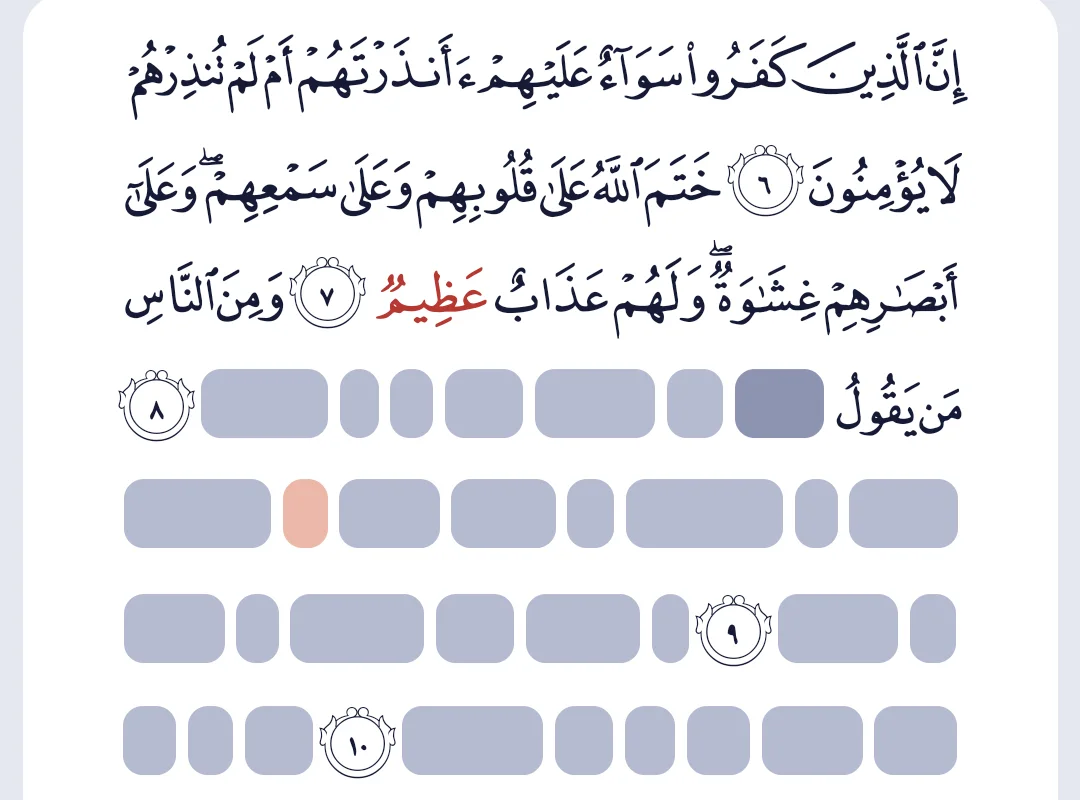
Recall the word, then check.
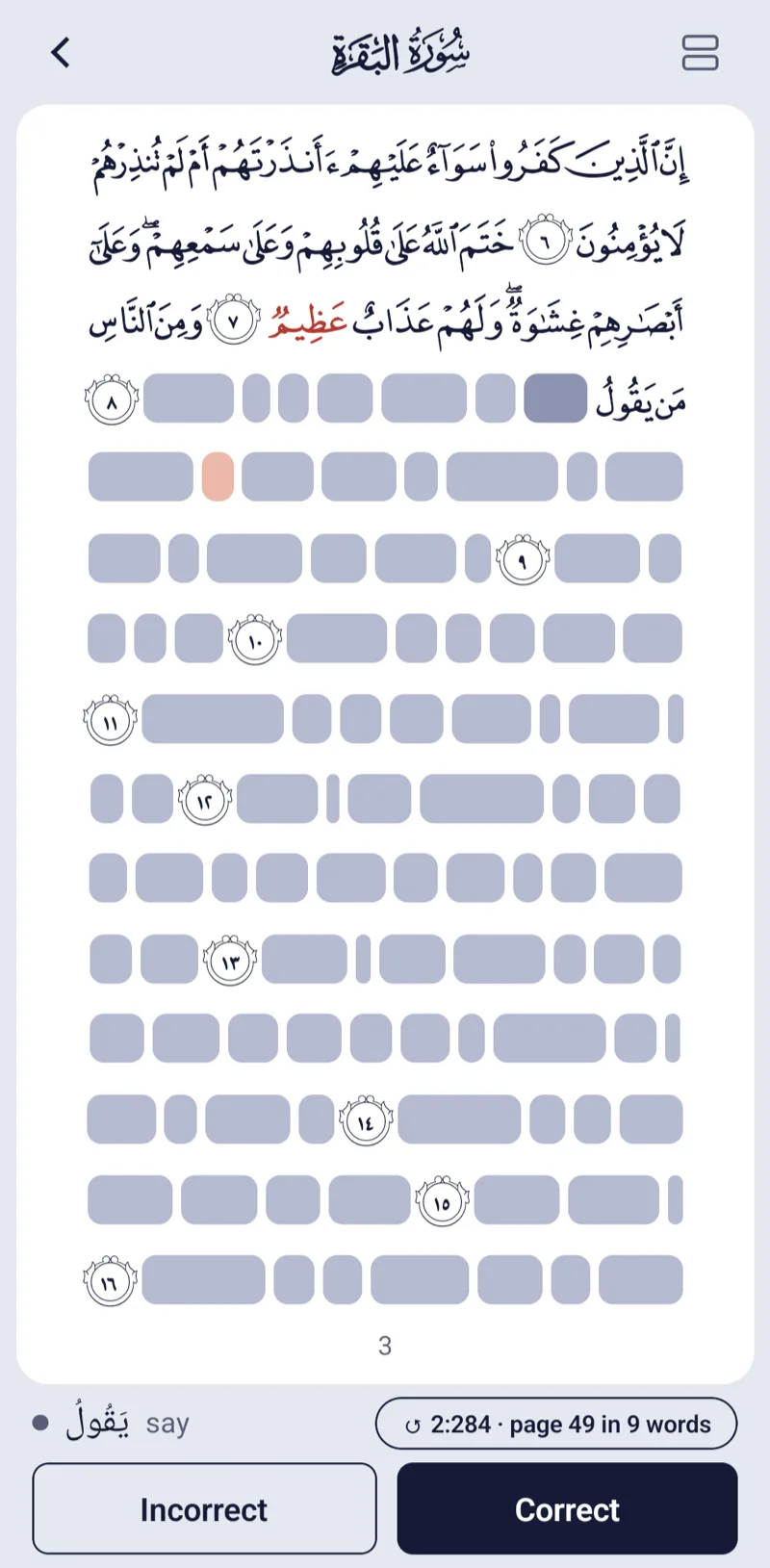
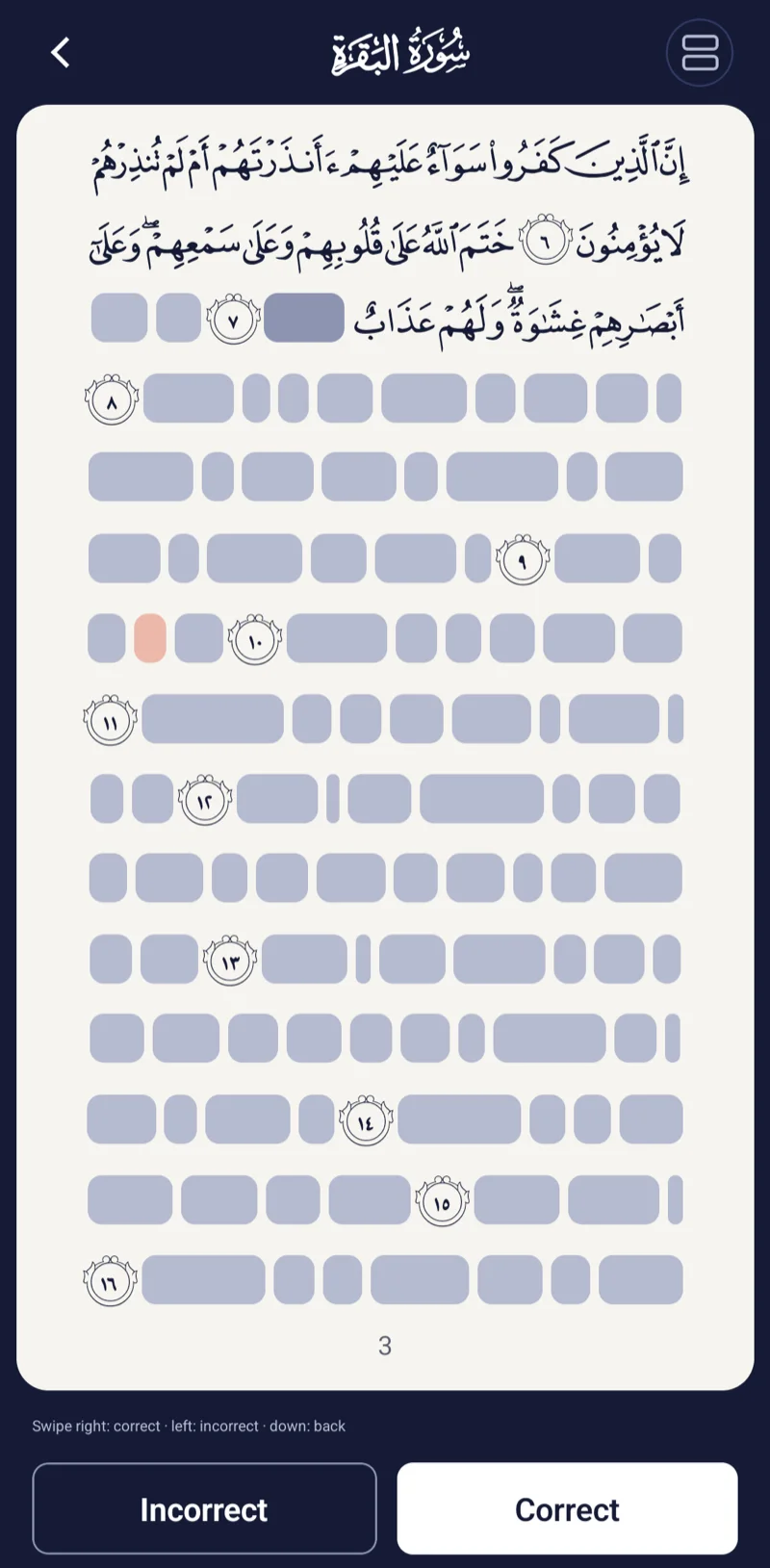
The mushaf page opens with its words covered. Say the next word from memory, then mark it correct or incorrect and the word appears. A mistake stays red on the page, so you see exactly where it was.

﷽
Taysir AI listens to your recitation, finds the exact places you tend to forget and brings them back until they hold. Made for busy people with ten minutes a day, and for those with hours.
وَلَقَدْ يَسَّرْنَا ٱلْقُرْءَانَ لِلذِّكْرِ فَهَلْ مِن مُّدَّكِرٍۢ
“And We have certainly made the Qur’an easy for remembrance, so is there any who will remember?”
Al-Qamar 54:17, Saheeh International translation
Taysīr means to make easy. It shares its root with yassarnā in this verse.
It chooses, you recall, and it remembers how every word went.
The mushaf page opens with its words covered. Say the next word from memory, then mark it correct or incorrect and the word appears. A mistake stays red on the page, so you see exactly where it was.
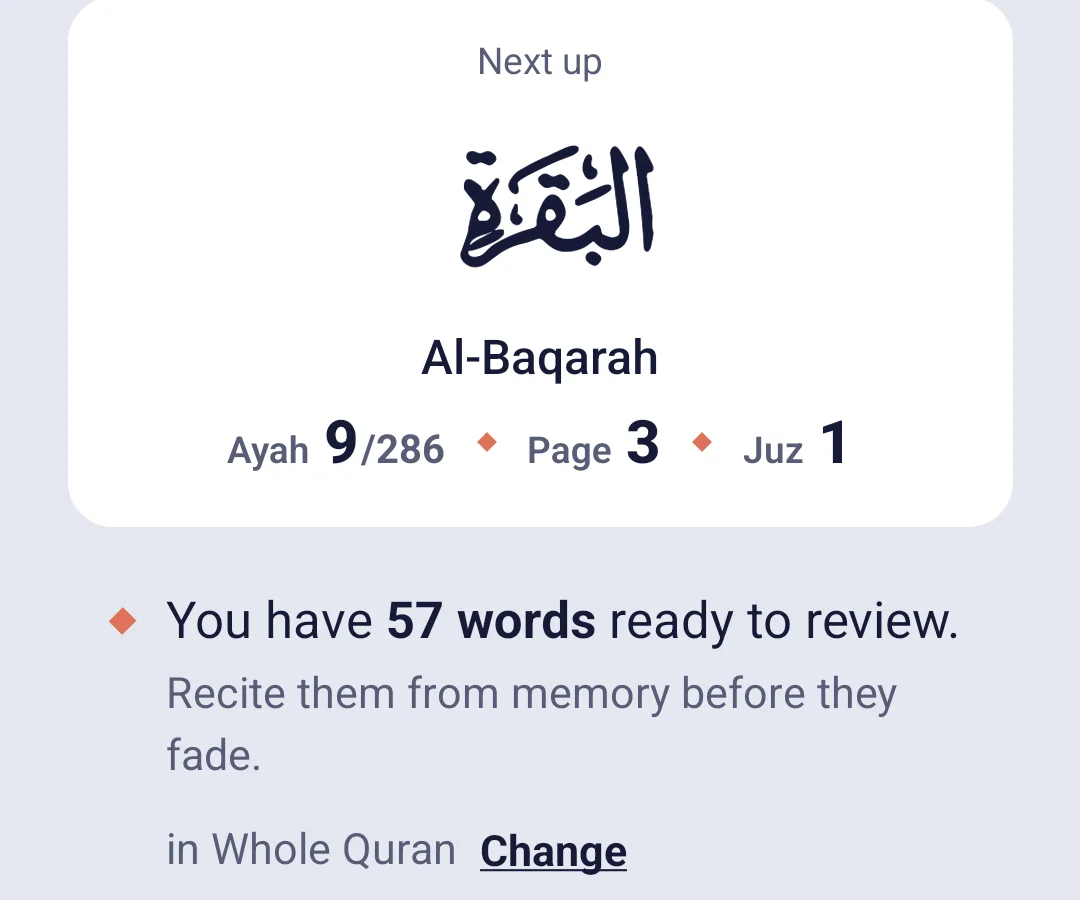
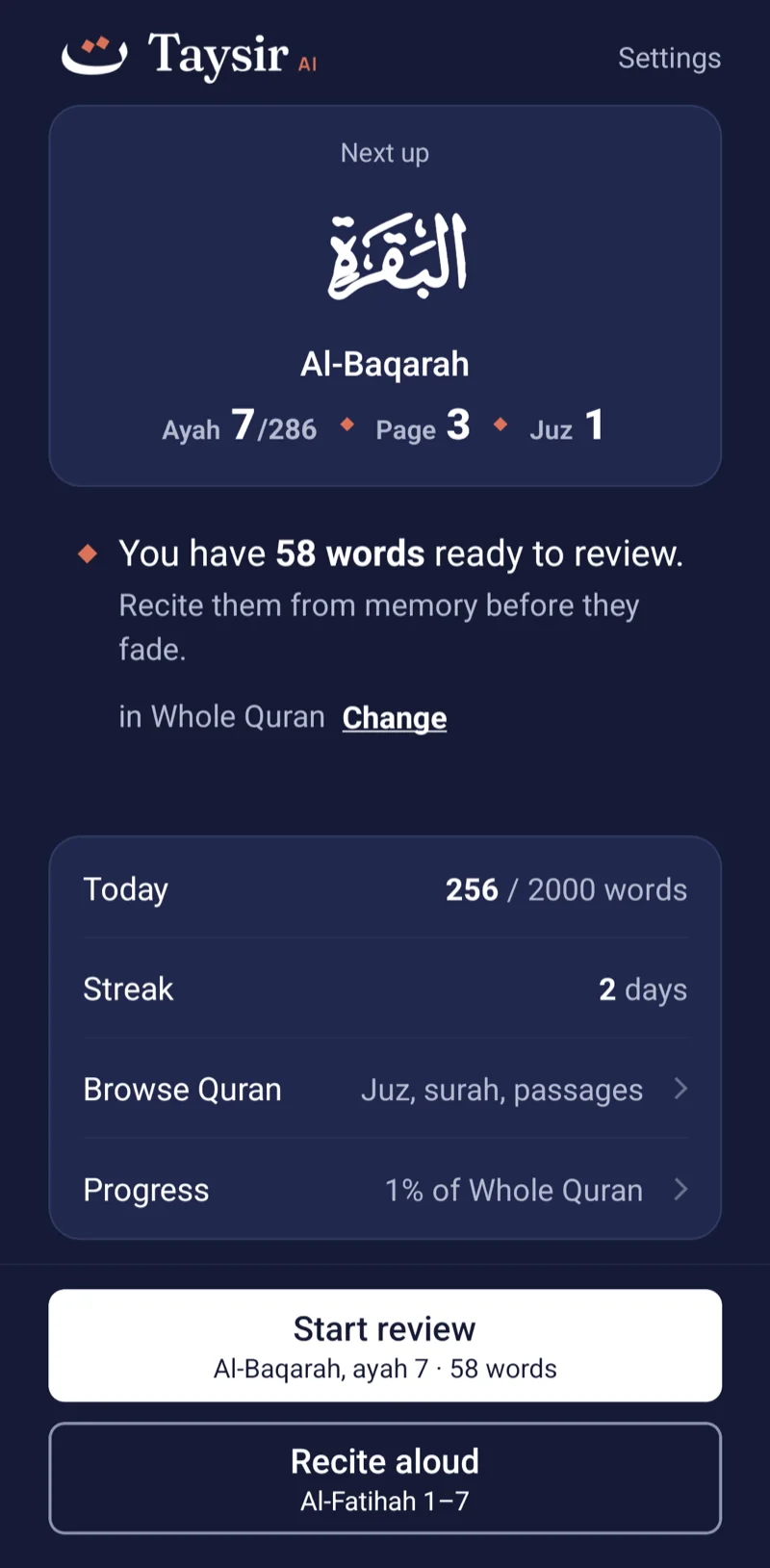
Revision comes before new memorization. Home shows how many words are due, and words you got wrong return sooner than words you know.
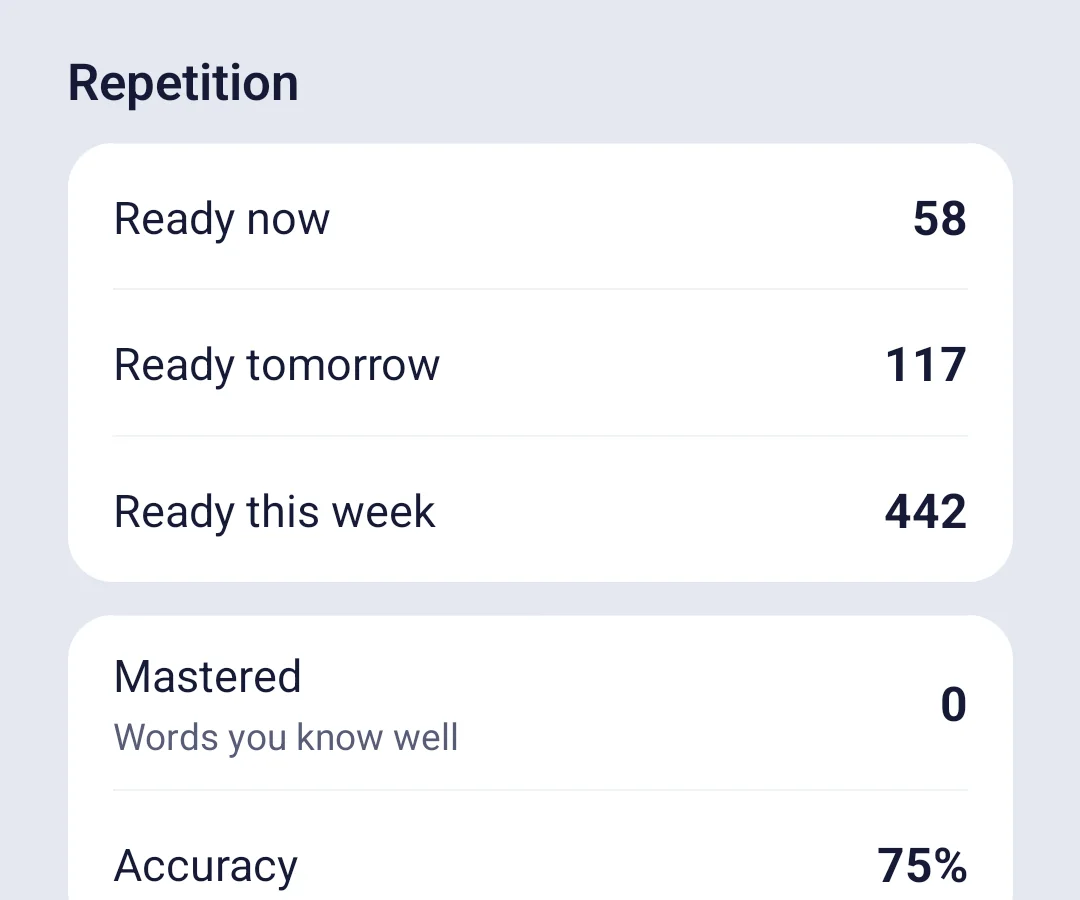
Progress counts the words ready now, tomorrow and this week, and how many you have mastered. Statistics show your sessions and your accuracy.
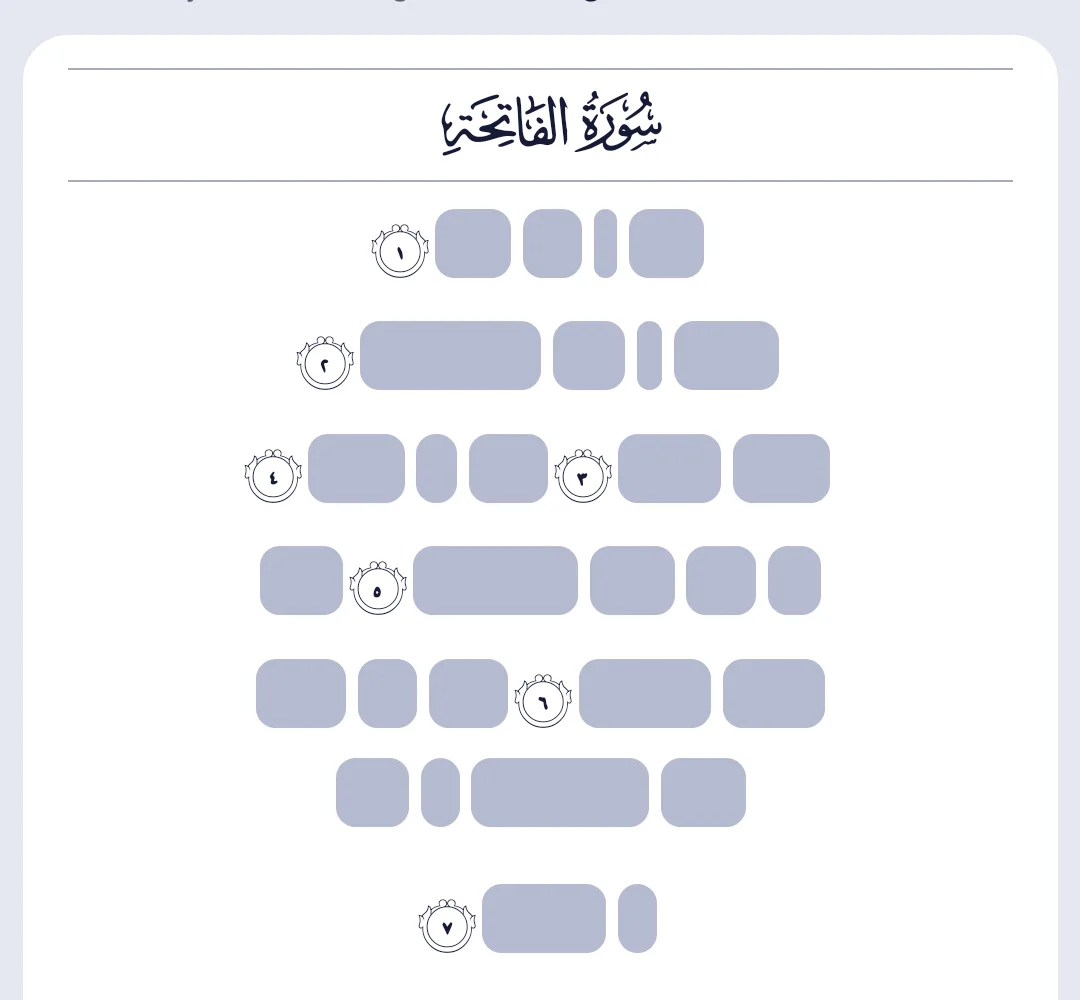
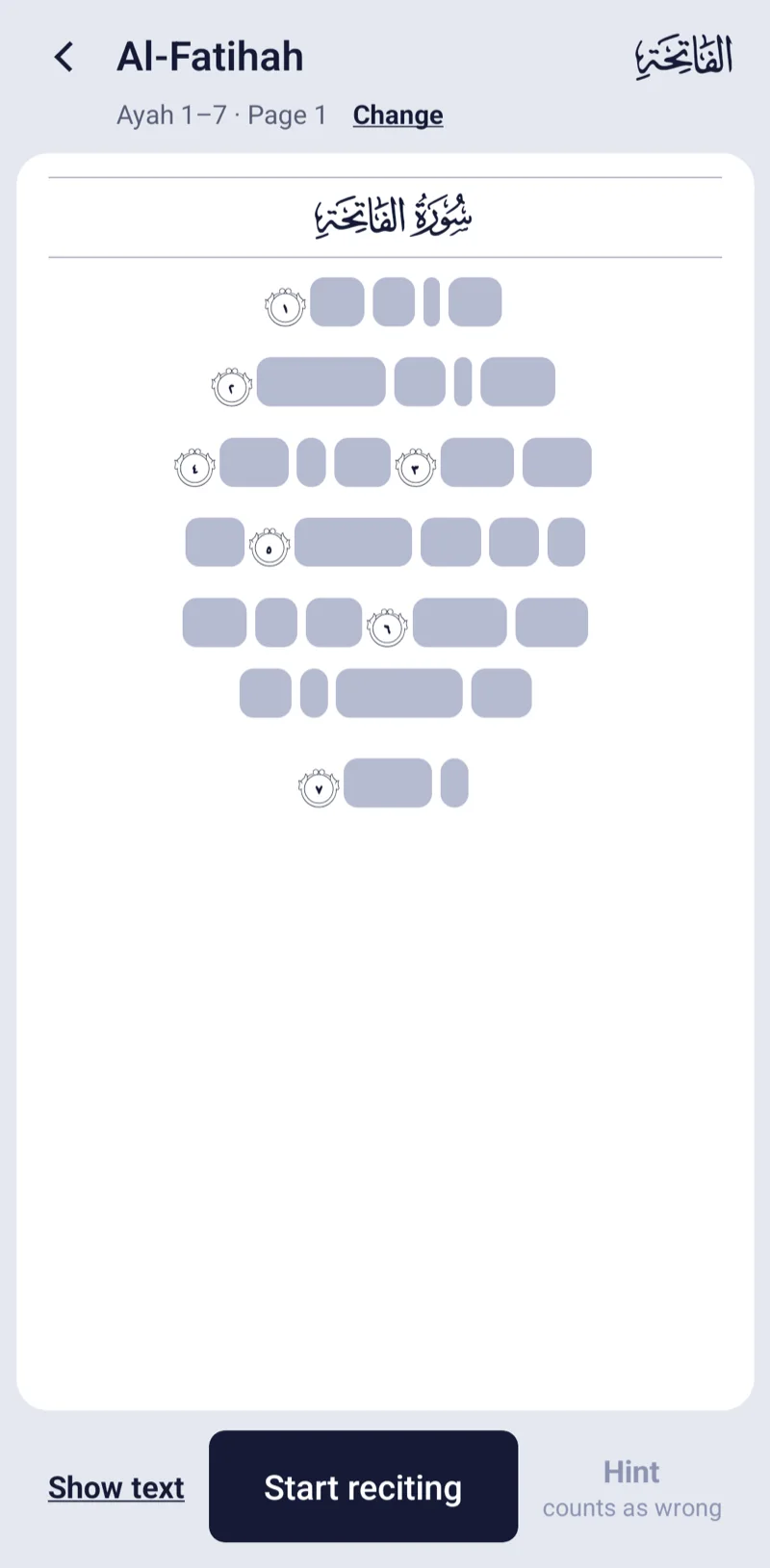
Choose a surah, a page or a passage and recite. The phone follows your voice, uncovers each word as you say it and marks the ones to look at again.
What you have memorized is kept before anything new is added, and the weak places get the most attention.
When nothing is due, you read on with new verses, a little at a time.
A word you get wrong comes back the same day and keeps returning, closer together, until it holds.
A word counts as mastered after ten successful recalls spread over time. It still returns for review.
Recitation is recognised on your phone. Your voice is not sent anywhere, and it works without internet once the recitation model is on the phone.
When you stop, the result shows the words heard correctly and the words to look at. Recognition can be wrong, so a flagged word only counts as a mistake when you confirm it.
Ask for a hint when you are stuck; a hinted word is saved as wrong. Tajweed notes point to a letter or a vowel to check and never change your review plan.
Busy, or with hours to give. It fits both.
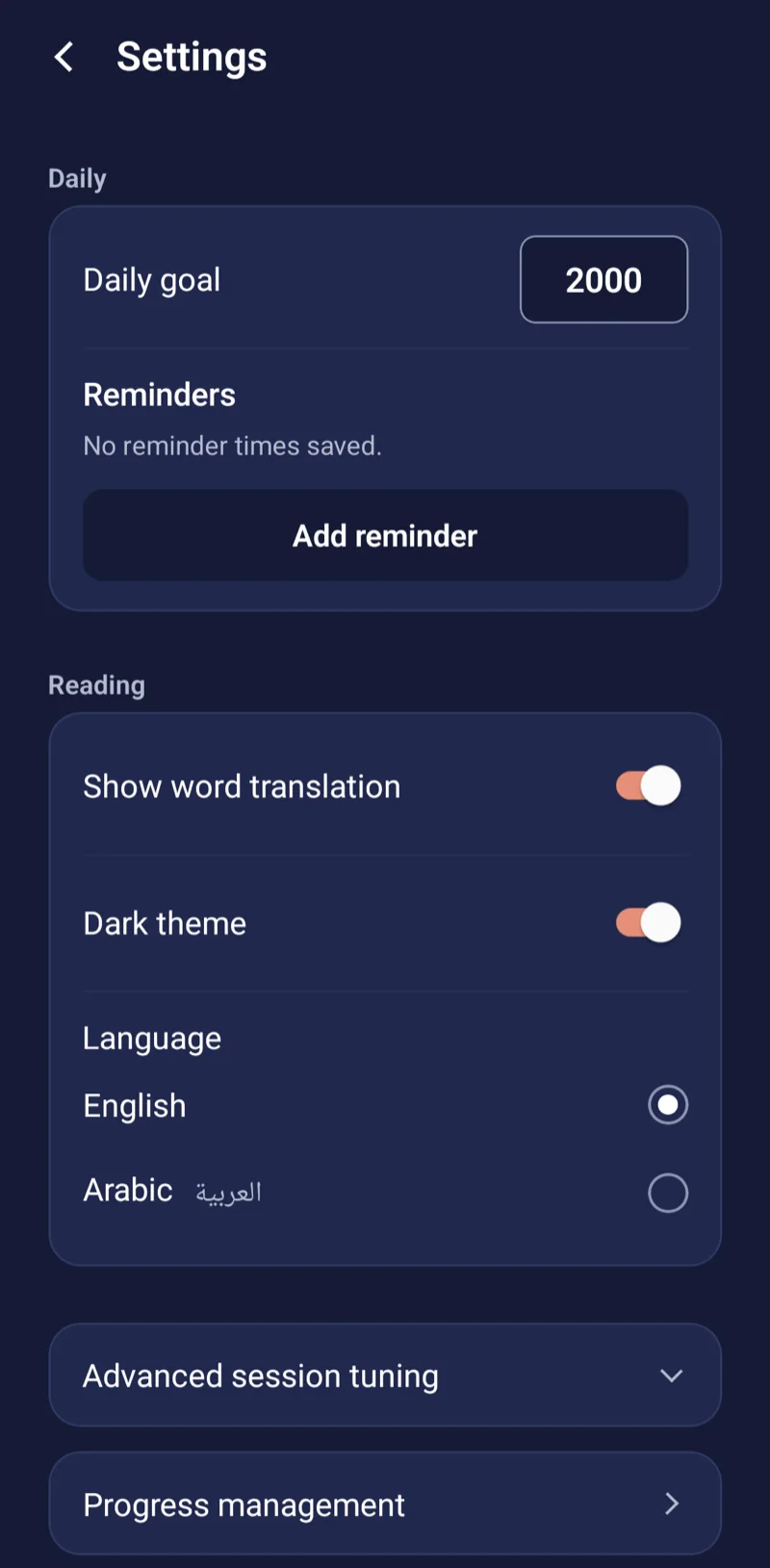
Choose your daily goal and your range. Taysir AI fits the review to the time you have, and the words you do not reach wait for your next session.
Turn on the dark theme in Settings. The page you recite from stays paper.
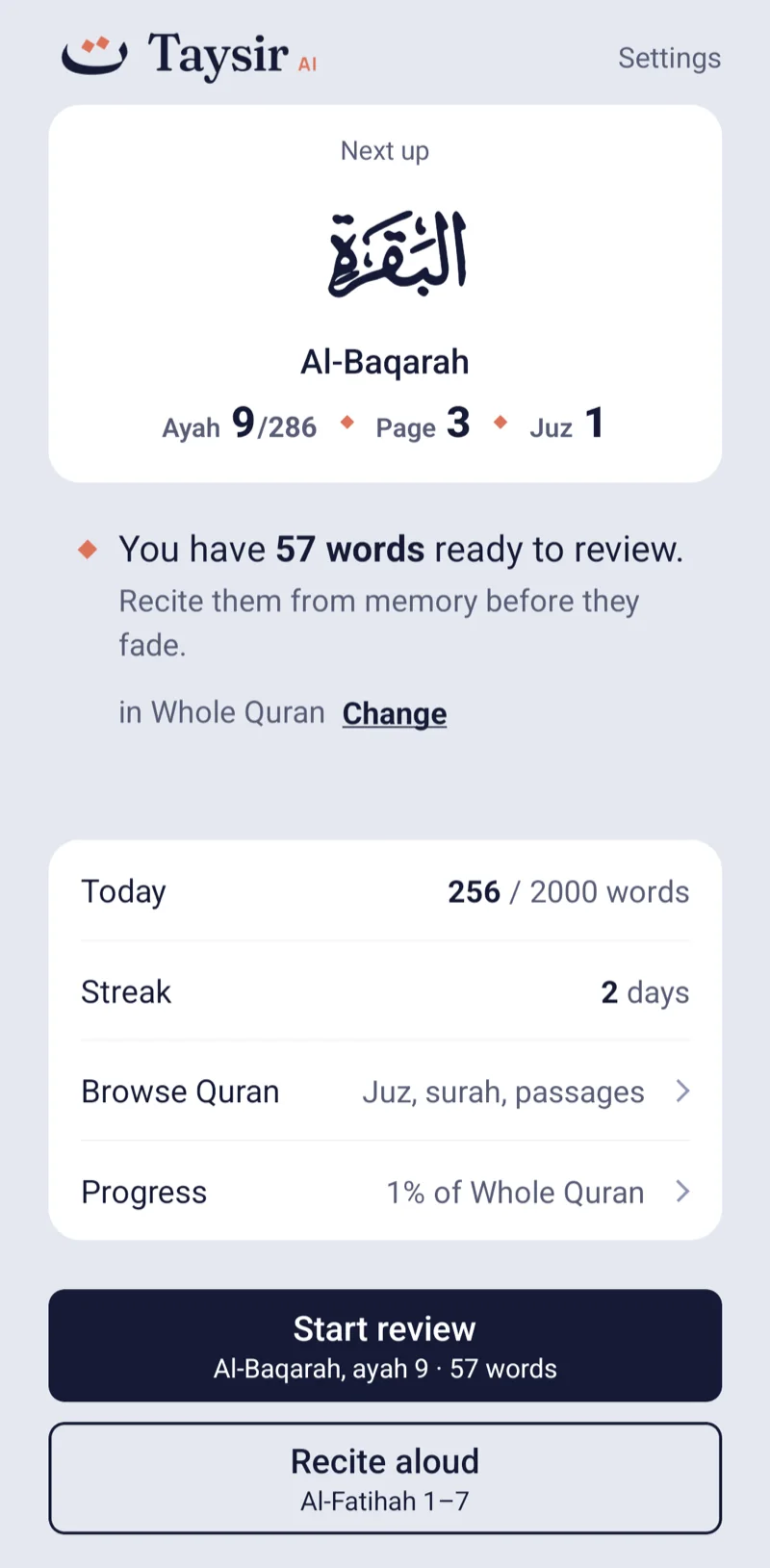
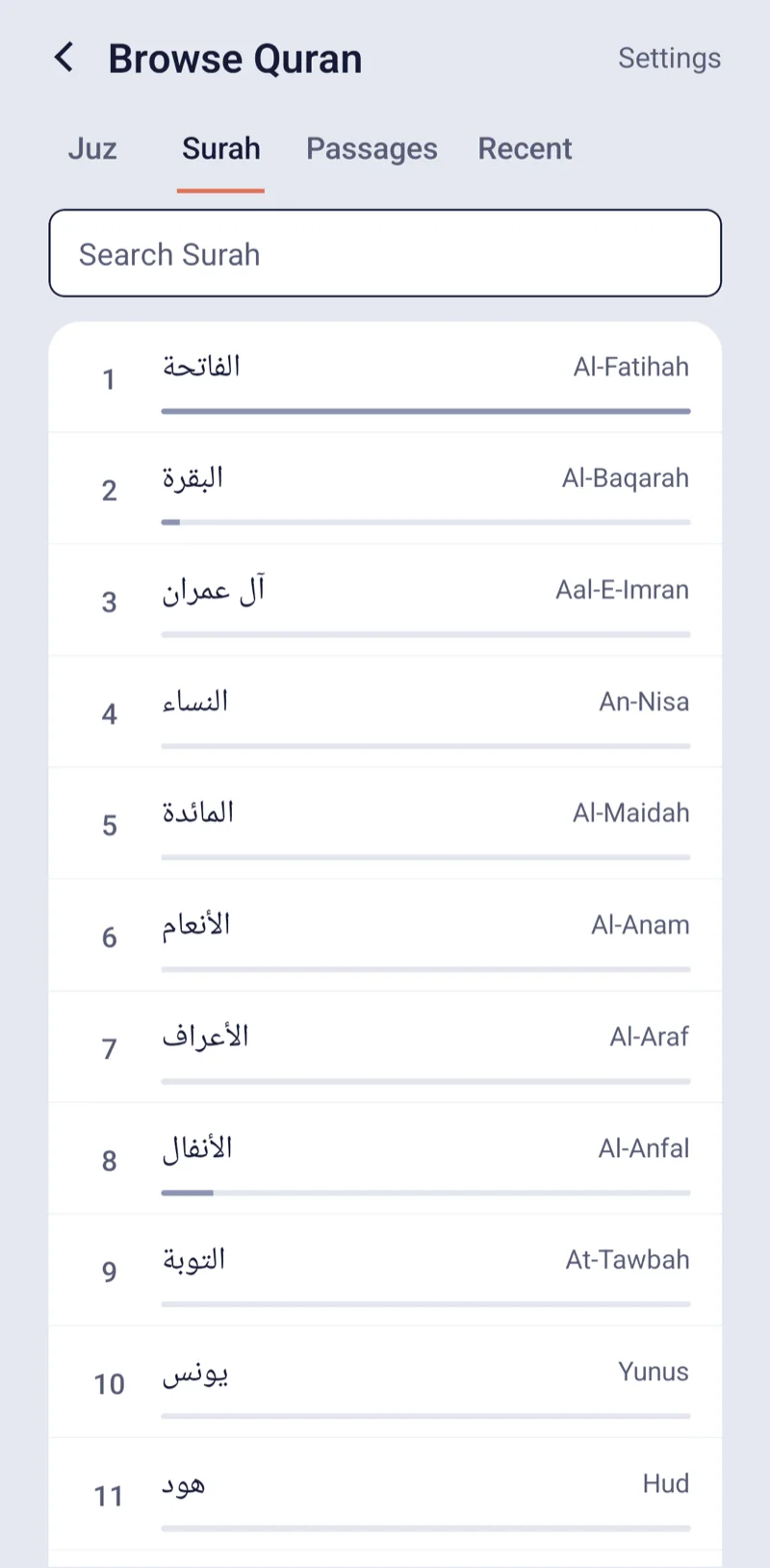
Taysir AI helps you maintain Quran memorization through murojaah. It brings words back for review and uses your answers to decide when they should return. You can practice with word cards or recite aloud.
Start with a manageable range and answer honestly. The aim is lasting recall, whether you have ten minutes or a longer session.
Words that are new or answered incorrectly need closer practice. They may return after a short wait before moving to longer review gaps. This is part of the learning plan.
Several immediate correct answers are not the same as successful recall after a wait. The app uses spaced recall when deciding whether a word is ready to move further ahead.
Words heard differently or not heard need your confirmation before they are saved as wrong. Tap a marked word and choose I got it wrong if it was your mistake. If you marked it by accident, choose It was right.
A hint is already treated as assisted recall and is saved as wrong when eligible. Unconfirmed flagged words are not saved and keep their review date.
Recitation recognition runs on your phone and works without internet once the required model is available. The listening process does not send your voice away for recognition.
Some builds can offer an optional local recording setting for investigating problems. If that setting is available and enabled, recordings stay on the phone. Check the setting rather than assuming that no local audio can be kept.
Mastered reflects evidence from successful spaced recall in the review stage. The mastery indicator uses ten successful spaced recalls in review, rather than ten quick repetitions in one sitting.
A mastered word can still become due for review. Keep reviewing when it returns; the label is a progress signal, not a reason to stop practicing that word.